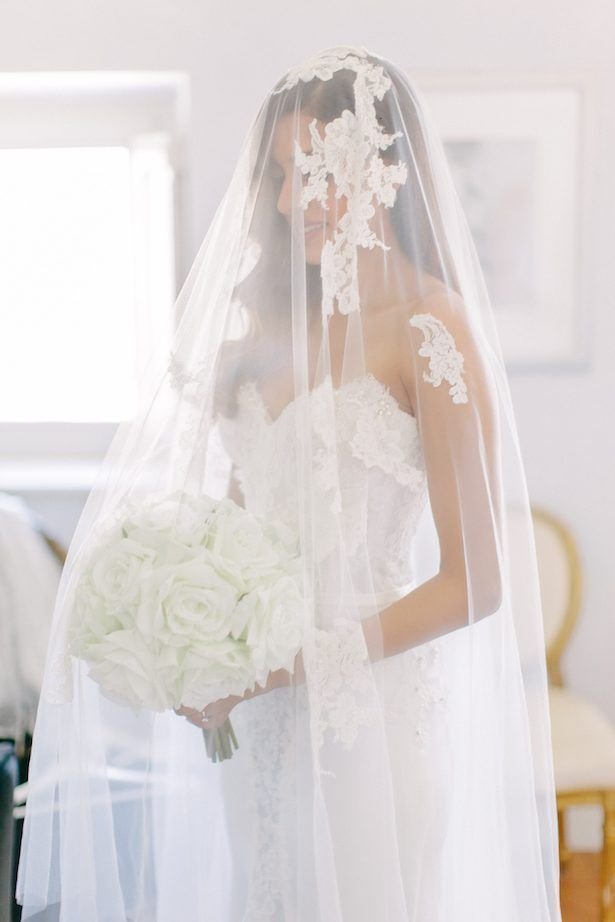
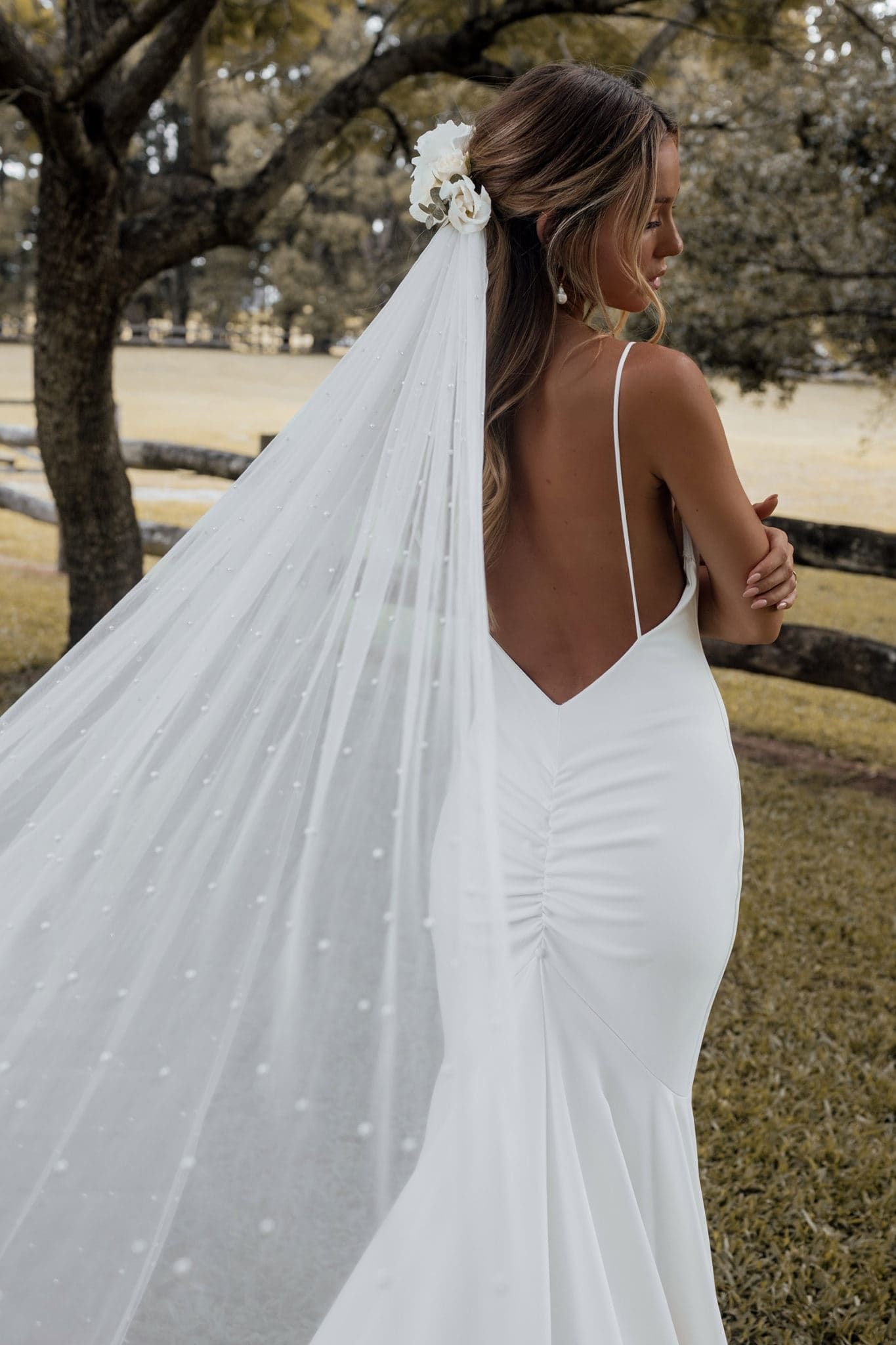
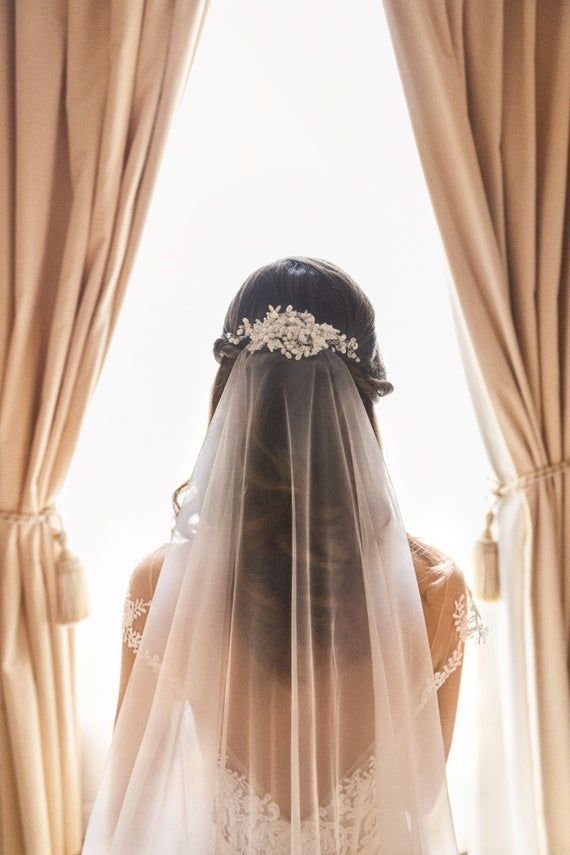
The age-old tradition of the wedding veil is now making a comeback after being dropped in recent years. Designers are drawing on the old-style charm of the veil and adding a modern touch.
Veils come in a variety of lengths and styles. Interestingly, it's the longer ones that are once more a la mode.
The wedding veil is also steeped in intriguing history.


While much gets lost in the mists of time, experts say the veil can be traced back to ancient Greek and Roman times. A bride would wear a veil as she walked down the aisle to shield her from malicious spirits that might've wanted to spoil her happiness.
Old superstitions also indicated it was bad luck for the bridegroom to see his intended's face before the wedding ceremony began.
Veils are also said to have different meanings in various religions. In Christianity, Judaism and Islam, the veil stands for modesty, decency, and chastity.
Besides the more recent discarding of the veil, it went out of fashion during the 17th and 18th centuries. There was a resurgence in its usage after Queen Victoria's wedding in the 19th century when it became a symbol of status.
Nowadays, the veil is more of a fashion item than a symbolic garment.
There are several kinds of veils, as well as materials and lengths. Some are made of separated pieces, and others are one piece. Some styles have a blusher – an extra layer to go over the face – and some do not. So, you need to assess all your available options and decide thereupon what you like best.
Veils can be made from tulle, French lace, Russian netting, and silk chiffon, amongst other materials.
The standard veil lengths include fingertip, chapel, cathedral, and floor lengths. The birdcage is the shortest style, typically ending around the jawline.
This traditional veil is U shaped and gathered into a comb at the top. It is a universal style, and the most likely to suit any wedding dress. Fingertip is the most common length for this design.
This is the classic bridal veil design with a blusher. The blusher adds an extra layer to the back, or to go over the bride's face. The blusher is usually 30" long, although this depends on the placement of the veil.
This style is a continuous piece instead of separated layers. It can be in an oval or circular cut. It features a sewn-in comb to create the blusher layer. Brides like to wear this style at fingertip or cathedral length.
This gorgeous Spanish design features an oval shape and a lace border. It is typically worn at the cathedral or floor length.
This design is like the Mantilla, minus the lace border. The oval shape veil boasts a lovely cascading edge.
This vintage style originated in the 1920s. It consists of two layers, gathered at each end to form a cap over the bride's head. This style lends itself to jewel or flower accessories to augment the gathered sections.
This chic style first came into fashion in the 1950s. Birdcage veils are typically short, only shielding the face or part thereof. The design typically features a netted rather than a sheer material.
Make sure the type, style, and length of your veil suits your dress. Remember, long veils are more formal and dramatic, while shorter ones are more casual and fun. If your dress is more traditional, it's better to wear a long veil than a short or birdcage style.
You'll need your dressmaker to take measurements to make sure your veil rests in precisely the right place.
If you're not sure what veil to choose, or if you need one, get some expert advice from your designer or dressmaker.
It's up to you whether you'd prefer to wear a veil or not. However, it is one of the only opportunities you'll get to wear such a dramatic piece in modern life. So, if you aren't convinced, at least entertain the idea and try a few on for fun!
If you're looking for your dream veil, you'll find lots of designers to help you on HAPPLY's directories.

Happly is coming soon, be the first to sign up when we launch!